2026 is set to be a defining year in home kitchen design. Economic shifts, lifestyle changes, and material and technological innovations are significantly influencing how we design our kitchens. As a design-build remodeling firm working closely with clients throughout the process, we’re seeing these shifts firsthand. In this article, our team shares some of the things homeowners are asking us to incorporate into their designs, what these kitchen trends mean in the broader context of remodeling, and how you can benefit from these changes.
Warmer, Richer Color Palettes Replace Cool Grays
One of the leading kitchen color trends this year is a shift from cool grays to earthy neutrals such as mushroom, clay, and warm whites. These tones settle into the space rather than dominate it, creating a more emotionally comfortable backdrop.
Alongside this, deeper cabinetry tones such as walnut, espresso, and muted greens are becoming more common, often paired with painted islands in richer and more confident shades.
These color palettes evoke a sense of permanence rather than trendiness, and they match well with wood, stone, stainless steel, and other materials that shape modern kitchen design ideas today.
A fine example can be seen in this Madison condo remodel we completed, where warm wood tones and striking tilework create an inviting kitchen space.
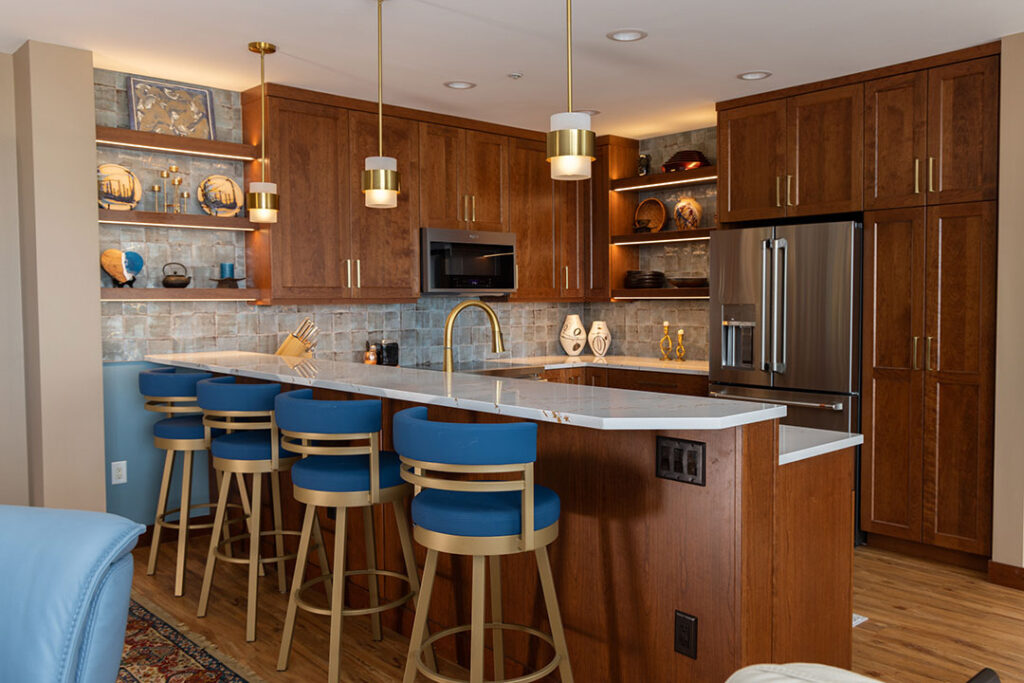
“We’re seeing homeowners move away from stark whites and cool grays. In 2026, kitchens feel layered and grounded. Clients are gravitating toward warmth — not just in color, but in texture. It’s less about contrast and more about cohesion,” says Linda Sweeney, Vice President & Design Consultant at Sweeney Design Remodel.
Integrated Storage That Eliminates Visual Clutter
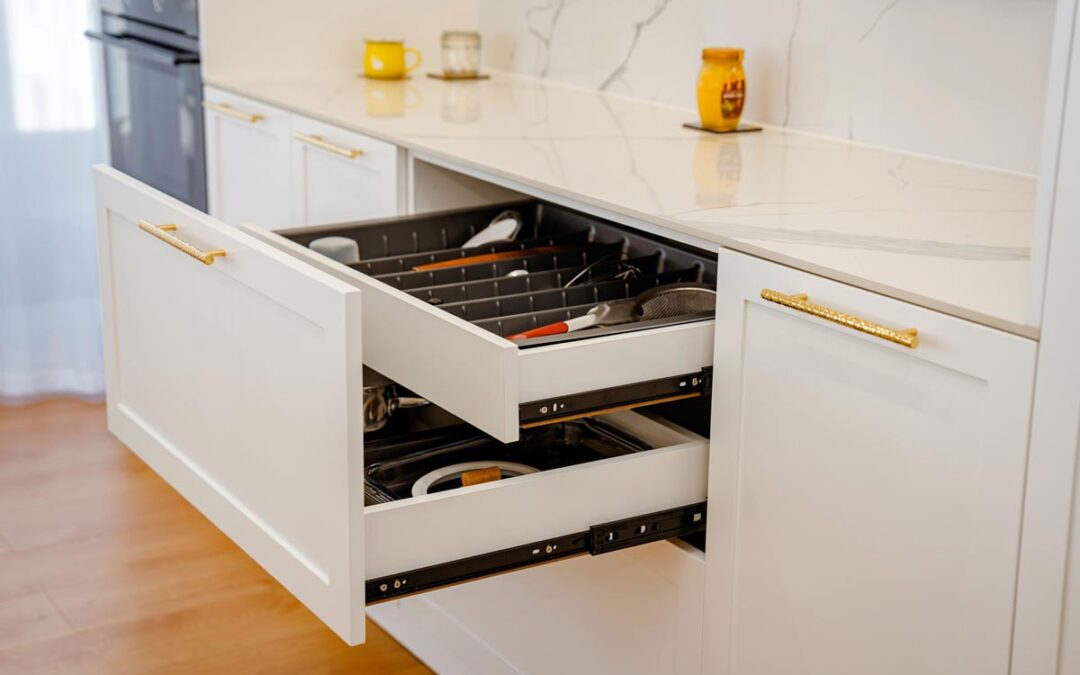
One of the more practical shifts in kitchen remodeling trends for 2026 is how storage is being integrated into the architecture of the space itself. Surfaces are kept clutter-free, with everything easily accessible through thoughtful, custom storage design.
Appliance garages, hidden coffee stations, and walk-through pantries are becoming integrated into the overall kitchen layout rather than treated as afterthoughts. Deep drawers are often preferred over upper cabinets, making everyday items easier to access while maintaining clean sight lines.
Integrated storage solutions like these are particularly well-suited to open-concept kitchens. Everything has a place, and the space works quietly in the background of daily life with functionality and aesthetics working as one.
“Homeowners don’t just want a beautiful kitchen — they want it to work harder. In 2026, the focus is on smart storage that keeps counters clear without sacrificing convenience. The goal is simplicity that feels effortless,” says Tim Sweeney, CR, President & Project Developer at Sweeney Design Remodel.
The Return of Statement Range Walls
The range wall is back as a statement feature. No longer blending into the background, it now anchors the entire space. This kitchen trend creates a natural focal point and an opportunity to highlight your decorative style.
Slab backsplashes are a common choice, often extending from countertop to ceiling for a clean, uninterrupted look. Oversized tile with minimal grout lines achieves a similar effect.
Custom metal hoods are popular, creating a nice contrast with surrounding fixtures and features, while integrated lighting adds depth and focus, drawing the eye without overwhelming the room.
The result is a kitchen that oozes luxury, adds architectural interest, and evaluates the resale value of your property as a whole.
“The range wall has become the anchor of the kitchen. Clients are investing in dramatic materials — stone slabs, textured plaster, or handcrafted tile — to give the space a signature moment,” says Brett Clarke, Project Developer at Sweeney Design Remodel.
Kitchen Islands 2.0: Multi-Functional Designs Homeowners Want
Kitchen islands have long been popular, but in 2026, they are taking on an even more central role in how the heart of the home is used day to day. With ever-evolving modern technology and related social and professional norms, homeowners want their islands to be suitable for cooking, working (remote or homework), browsing the internet, and gathering.
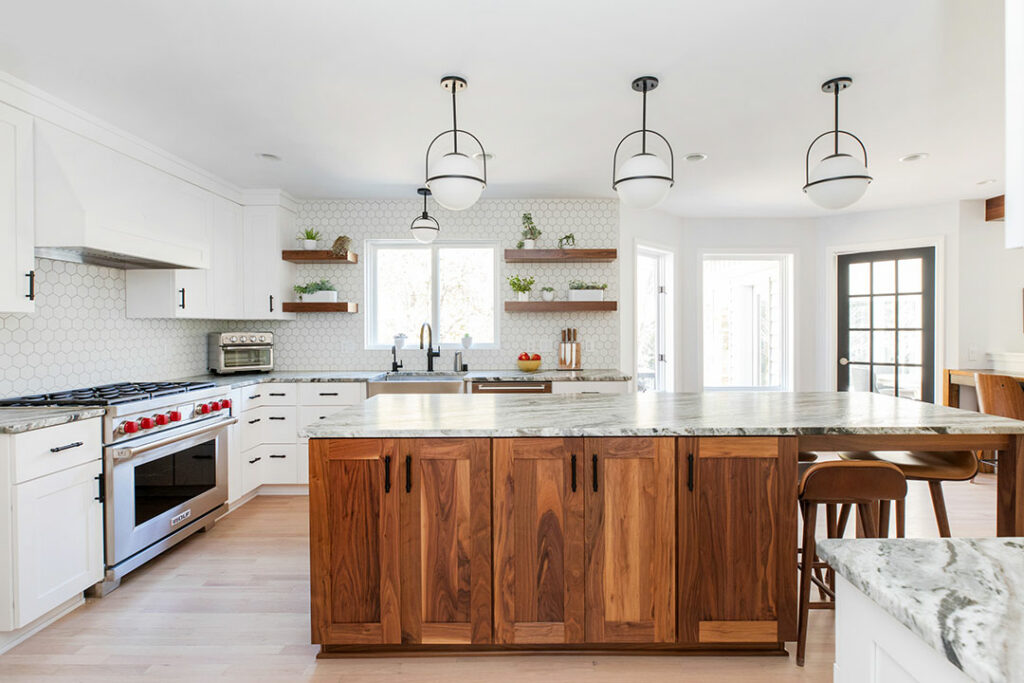
We’ve noticed split-level and oversized islands are popular choices, allowing different activities to take place simultaneously. Integrated seating zones are also in demand, offering flexibility for different occasions. This is reflected in the enlarged walnut Island we incorporated into a Madison kitchen remodel, which includes seating for up to four people.
Built-in beverage refrigeration, charging drawers, and concealed outlets are becoming standard in custom kitchen island designs, helping the space support modern lifestyles and routines.
“Islands are no longer just prep space. In 2026, they’re command centers. We’re designing islands that serve as dining tables, workstations, and entertainment hubs — all in one,” says Linda.
Natural, Sustainable Materials for Modern Kitchens
Natural materials that last and perform well over time are also increasingly in demand this year. Homeowners want the materials they select to hold up with daily use, especially in multifunctional kitchens.
Quartzite and other natural stone surfaces are gaining traction for their exceptional durability and depth of character. Quartzite countertops are heat-resistant, meaning you can put hot saucepans directly onto the surface. Many varieties even mimic the look of marble.
Madison homeowners also care about environmental responsibility when choosing kitchen materials. Quartzite is considered an eco-friendly choice for several reasons. It’s a 100% natural material, has a low chemical impact, is long-lasting, and is even recyclable.
“Clients are asking deeper questions about where materials come from and how long they’ll last. Sustainability isn’t a buzzword anymore — it’s an expectation,” says Tim.
Layered Kitchen Lighting Plans
Single overhead lighting fixtures have been out of date for a while, as layered lighting has taken precedence. This year sees layered lighting plans that adapt throughout the day being approached with more intention than ever before.
The combination of multiple light sources in a single plan offers greater flexibility, functionality, and creativity in modern kitchens. Under-cabinet lighting handles task areas, while pendants add focus and character over islands. Toe-kick lighting introduces a softer glow at foot level, softening the mood in the evening.
Dimmable smart systems provide homeowners with even more clever options. Lights can be controlled directly or via smart devices, and lighting can be programmed to illuminate at varying intensities at different times of day.
A well-designed kitchen lighting plan supports how the kitchen is used and enjoyed while enhancing high-end materials, sophisticated features, and, perhaps most importantly, mood.
Architectural Detailing Instead of Decorative Add-Ons
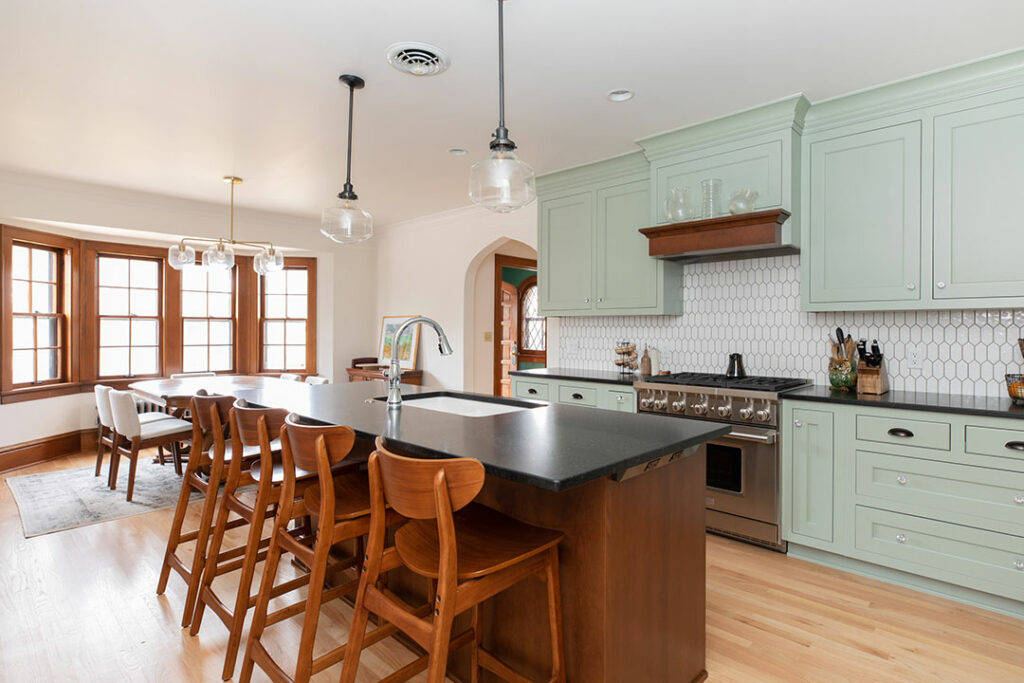
A trend that has been growing in popularity recently and will only increase throughout this year is a move toward architectural detail as a core part of kitchen design. The focus here is on elements that are built in from the start of a remodeling project rather than applied later.
Fluted wall paneling is an example that adds a sense of depth, proportion, and visual interest to the space. Cabinet inset details are another, as is custom millwork incorporating handcrafted wood products designed and fabricated to your specific requirements and tastes.
Arched transitions and structural features can be utilized to guide how the kitchen connects to surrounding rooms. These elements are often subtle but very deliberate in how they influence the style and feel of the interiors.
For luxury kitchen remodels in particular, this high level of craftsmanship elevates the style of the kitchen and dining areas while making all features and transitions feel cohesive and intentional. In older properties, architectural detailing can be crafted to preserve the home’s architectural integrity during an upgrade, as we did in a Nakoma interior remodel in Madison.
This focus on even the smallest of details distinguishes high-end remodels from cosmetic updates and adds long-term value to your property as a whole.
Designing a Kitchen for Longevity
Homeowners in Madison and throughout Wisconsin are moving toward kitchen designs that are timeless and built to last, rather than being led by what’s trendy at any given time.
Nature-inspired color palettes, integrated storage, and custom woodwork all point to a more considered approach to kitchen design that emphasizes warmth, function, and architectural detailing. Materials are selected for durability, while layouts are shaped around modern lifestyles, tech-related habits, and each family’s unique daily needs that shape the flow of the space.
A design-build approach to remodeling, where designers, craftsmen, and builders work under one roof from start to finish, provides clarity and continuity throughout every stage of the project. Budget, scope, and design are aligned early, helping avoid complications later.
With a single team guiding the project and experienced professionals overseeing both the details and the build, homeowners can stay involved in creative decisions without bearing the burden of day-to-day coordination.
At Sweeney Design Remodel here in Madison, WI, we’ve been helping homeowners create the kitchens and homes of their dreams since 1954.
Work with Madison’s Top Remodeling Experts
As one of the most trusted names in remodeling, we ensure fantastic results for every project we complete. Our 4-step design-build methodology seamlessly integrates both the design and build elements of a project.
Our experienced and friendly team guides homeowners through a proprietary design-build process where customers remain informed, engaged, and 100% satisfied. We can do the same with you.
Take a look at our special approach to home remodels, sign up for our newsletter, and reach out to us directly. We look forward to discussing how we can help you achieve the perfect home.